
RCM Management

Top 10 Healthcare Revenue Cycle Management Companies in USA

Home / Top 10 Healthcare Revenue Cycle Management Companies in USA

Top RCM companies are optimizing healthcare financial operations. Today’s healthcare organizations face broken billing workflows, high claim denials, and administrative headaches that drain cash flow. When scheduling, medical coding, claims submission and collections operate in silos, the result is longer days in accounts receivable and preventable revenue loss.

CFOs and practice managers report that denials and prior authorization delays are their top RCM headaches. These issues mean longer days in A/R and lost revenue, making expert RCM support critical for any practice.

In fact, research shows that over one-third of providers experience denial rates of 10% or more, and nearly half report reimbursement delays of two months or longer. These challenges make it difficult to maintain a consistent cash flow and control administrative costs. This is why the top 10 healthcare revenue cycle management in the USA have become essential partners.

What is Revenue Cycle Management in Healthcare

Revenue Cycle Management refers to every step in the healthcare billing cycle, from patient registration through coding, claim submission, and final payment. It encompasses verifying insurance coverage, assigning correct CPT and ICD-10 codes, submitting claims to payers, and following up on reimbursements. 

The RCM process in healthcare includes:

  • Patient Registration & Scheduling: Collecting correct patient details and insurance information at the start.
  • Insurance Eligibility Verification: Confirming coverage before services to prevent denials
  • Medical Coding: Translating diagnoses and procedures into standardized codes (CPT codes like 99213 for office visits, ICD-10 codes like E11.9 for Type 2 diabetes)
  • Charge Capture & Entry: Ensuring all billable services are documented
  • Claims Submission: Filing clean claims to insurance payers
  • Payment Posting: Recording and reconciling payments received
  • Denial Management: Identifying, appealing, and resolving rejected claims
  • Patient Collections: Managing patient responsibility and payment plans

Did you know?

By outsourcing these processes to RCM healthcare companies like Hello MDS and Medatron, providers can reduce errors, improve compliance, and focus on quality patient care.

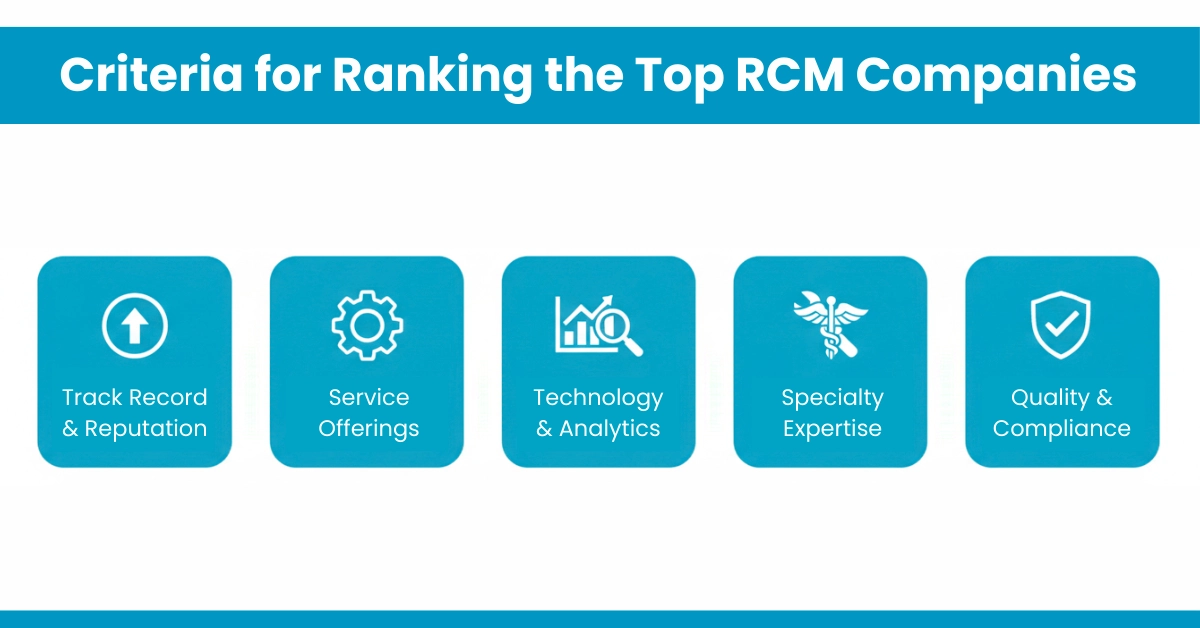
Criteria for Ranking the Top RCM Companies

We evaluated firms based on factors like experience, breadth of services, technology, and client satisfaction. Key criteria included:

  1. Track Record & Reputation: Years of experience and strong client feedback.
  2. Service Offerings: End-to-end RCM including medical billing, coding, denial management, credentialing
  3. Technology & Analytics: Using modern tools to process claims faster and reduce errors.
  4. Specialty Expertise: Experience in providers’ specialties (cardiology, orthopedics, etc.) matters, as specialty-focused RCM solutions tend to achieve higher accuracy and patient satisfaction.
  5. Quality & Compliance: HIPAA compliance, certified coders (e.g., AAPC-certified or CPC), and strong compliance standards ensure accuracy and reduce audit risk.

These criteria ensure that healthcare providers select RCM companies in the USA that truly enhance financial performance.
Criteria for Ranking the Top RCM Companies

Top 10 Healthcare RCM in the USA

HelloMDs

It is a premier healthcare revenue cycle management company offering end-to-end RCM healthcare services for many years. With AAPC-certified coders and billing experts, Hello MDs ensures accurate CPT & ICD-10 coding, denial management, prior authorization, accounts receivable, and medical billing audits. Their expertise helps providers reduce claim denials, optimize cash flow, and streamline financial workflows.

“Best for small, mid-sized and large-sized Practices.”

Medatron

Medatron provides comprehensive RCM outsourcing benefits, including medical billing, credentialing, and payment posting. Their end-to-end services focus on reducing denials, improving reimbursement cycles, and enhancing patient financial experience.

MediBillMD

It offers comprehensive physician billing services, focusing on specialties with high denial rates. They tackle challenges like claim denial management by resubmitting appeals swiftly, reducing A/R days. According to user reviews, their performance reporting has helped practices recover old receivables effectively.

Waystar

WayStar uses predictive analytics to prevent denials, solving issues like complex payer rules. Their platform integrates patient financial experiences, reducing bad debt from unexpected costs.

Tebra

Tebra’s all-in-one solutions address integration challenges, combining EHR with billing to minimize duplicate work. Ideal for small practices facing talent gaps in coding.

R1 RCM

R1 RCM focuses on revenue integrity, helping large systems combat revenue leakage. Their analytics dashboards provide real-time insights, as noted in industry benchmarks.

Athenahealth

Athenahealth’s cloud tools reduce claim rejections by scrubbing data and addressing pain points in poor analytics with detailed reporting. All processes are handled through a single system, improving efficiency, reducing administrative workload, and driving better financial results.

AdvancedMD

AdvancedMD integrates telehealth, solving workflow issues for growing practices with automation.

PwC (PricewaterhouseCoopers)

PwC provides strategic consulting, using AI to cut costs and improve reimbursements for enterprises.

DrChrono (by EverHealth)

Dr Chrono offers mobile workflows, easing security and compliance risks with HIPAA-compliant features.

Advice from HelloMDs: Choosing a partner from this list ensures your practice reduces denials, accelerates reimbursements, and maintains regulatory compliance. You can trust us because we are collaborating with 100+ practinioners. 
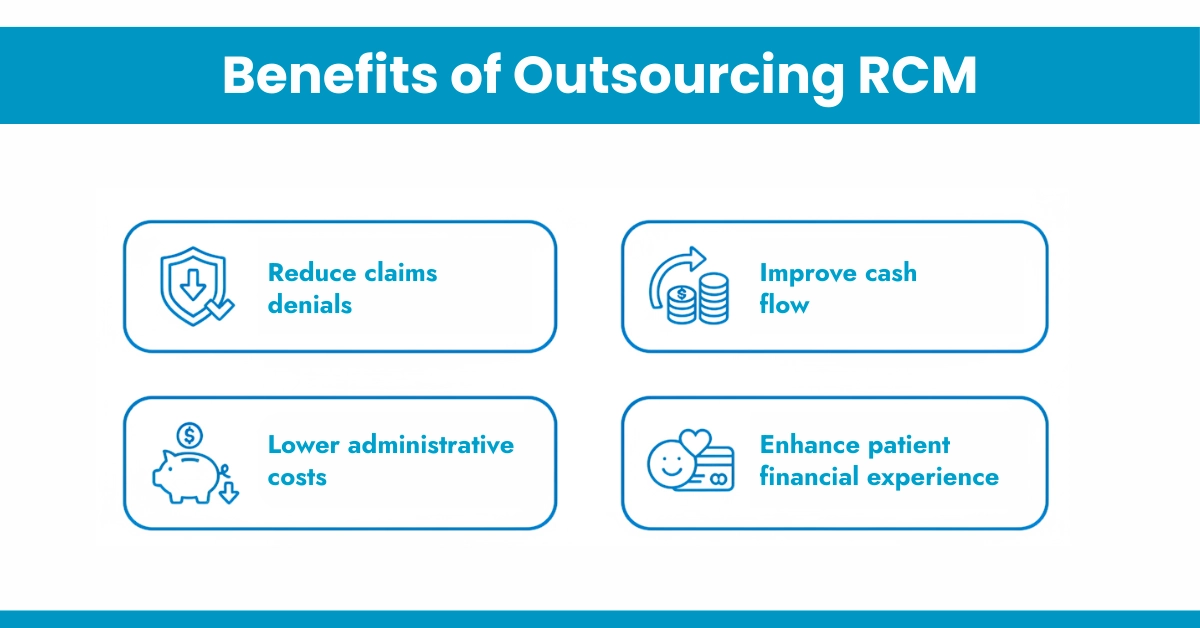
Benefits of Outsourcing RCM to Top US Companies:

  • Reduce claims denials with expert coding and claim reviews
  • Improve cash flow via efficient A/R and payment posting
  • Lower administrative costs by minimizing manual billing errors
  • Enhance patient financial experience through transparent billing
  • Stay complaint with HIPAA and payer regulations

Benefits of Outsourcing RCM

How Top Companies Solve Critical RCM Challenges

Healthcare RCM is fraught with pitfalls. Top companies address issues such as:

  • Broken Billing Workflows: Streamlined processes reduce errors.
  • High Claim Denials: Denial management specialists ensure claims are corrected promptly.
  • Rising Administrative Costs: Outsourcing RCM reduces staff overhead.
  • Complex Payer Rules & Regulatory Pressure: Experts stay updated with CMS, Medicare, Medicaid, and commercial insurer rules.
  • Lack of Real-Time Analytics: Dashboards highlight revenue leakage points.
  • Poor Patient Financial Experience: Transparent billing, payment plans, and accurate statements.
  • Talent Shortages & Training Gaps: Skilled coders and billing experts help prevent mistakes.
  • Integration Challenges: Seamless coordination with EHR and practice systems.
  • Security & Compliance Risk: HIPAA-compliant workflows.
  • Revenue Leakage Everywhere: Continuous monitoring and follow-up on unpaid claims.

Emergency Trends in Healthcare RCM

  • AI and Automation: AI-driven billing, coding assistance, and predictive claim analytics are becoming standard in RCM.
  • Integrated Platforms: Unified systems replace separate billing, EHR, and patient engagement tools for seamless workflows.
  • Patient-Centric Billing: Consumer-friendly portals and automated payment plans enhance transparency and patient satisfaction.
  • Value-Based RCM: Analytics support bundled payments, capitation, and quality-based reimbursement.
  • Regulatory Changes: RCM companies adapt to new rules like Medicare Advantage prior-authorization updates.
  • Rural & Small Practice Support: Tailored RCM services help small and rural practices manage CPT/ICD-10 coding and survive financially.
  • Continued Consolidation: Healthcare organizations combine in-house and vendor RCM functions for optimized revenue management.

Choosing the Right RCM Partner for Your Practice

When selecting a revenue cycle management partner, consider:

  • Experience with your specialty (e.g., cardiology, orthopedics)
  • Proven reduction in claim denials and reduced A/R days
  • Integration with existing EHR systems
  • Transparent reporting and regular performance reviews
  • HIPAA compliance and advanced security

Whether you’re a large hospital system or a small practice, the right partner can mean the difference between stagnating revenue and sustainable financial growth.

Conclusion:

Selecting an RCM healthcare company is a strategic decision. Begin by identifying your pain points, such as high denial rates in orthopedics, slow A/R in cardiology, or credentialing bottlenecks.

A partner like Hello MDs offers a compelling solution with AAPC-certified coders and full services, including prior authorization, denial management, and medical billing audits. This allows physicians and administrators to focus on patient care and practice growth.

Disclaimer:

This article is created for general informational purposes only and is not a replacement for professional advice. Always verify coding and billing information with certified experts at Hello MDs. Any images or visuals included are for illustration and may be digitally generated.

Frequently Asked Questions

They optimize billing, reduce claim denials, streamline reimbursements, and manage revenue efficiently, ensuring consistent cash flow and minimal financial losses.

Criteria include experience, service range, specialty expertise, compliance, client satisfaction, and proven success in reducing claim denials effectively.

They manage billing complexity, prevent revenue leakage, maintain compliance, and allow providers to focus on quality patient care.

Outsourcing is ideal when claim denials increase, administrative costs rise, reimbursement cycles slow, or revenue leakage threatens financial stability.

Benefits include faster reimbursements, lower administrative costs, fewer errors, improved patient financial experience, and stronger overall revenue performance.

Leave a Reply

Your email address will not be published. Required fields are marked *

×

Request a Free Consultation