
Are your pre-operative clearance claims getting denied despite providing thorough patient evaluations? You’re not alone. Medical practices across the country lose thousands in revenue annually due to improper pre-op clearance ICD-10 coding. According to the Centers for Medicare & Medicaid Services (CMS), proper documentation of these exams is key to reimbursement. It’s about protecting your bottom line while ensuring patients get timely surgical care.
This guide walks you through everything you need to know about pre-surgery testing ICD-10 and preoperative exam ICD-10 codes, and shows how modern RCM solutions can eliminate these headaches.
Before any patient goes for surgery, healthcare providers need to ensure they’re medically fit for surgery. These codes communicate to payers that a patient requires medical evaluation before a surgical procedure to assess surgical risk and optimize outcomes. This involves reviewing medical history, conducting physical examinations, and ordering necessary tests like blood work, EKGs, or imaging studies.
The 2026 edition of ICD-10-CM codes, effective on October 1, 2025, keeps these Z01 subcodes in use, so it is important for medical billers and coders to stay current with the latest coding updates.
From a billing perspective, accurate pre-op clearance ICD-10 coding is essential because:
Preoperative clearance codes fall under the Z01 category for “Encounter for other special examination without complaint, suspected or reported diagnosis.” These codes communicate to payers that a patient requires medical evaluation before a surgical procedure to assess surgical risk and optimize outcomes. The most commonly misunderstood codes include:
Why this matters:
Using the correct Z-code helps justify medical necessity, ensures the visit is understood as a clearance encounter, and reduces the risk of denials. According to AAFP coding guidance, the Z01 code should be sequenced before the surgical diagnosis
ICD-10 Code | Description | Use Case | Documentation Needs |
Z01.810 | Preprocedural cardiovascular examination | Cardiac clearance (EKG, risk stratification) | Cardiology notes, risk stratification |
Z01.811 | Preprocedural respiratory examination | Pre-op lung assessment for smokers, asthma, and COPD | Pulmonary function tests, ABG results |
Z01.812 | Preprocedural laboratory examination | ICD-10 pre op labs only (no exam) | Complete lab panel list |
Z01.818 | Other preprocedural examination | Imaging/special clearance (MRI, etc.) or general evaluation | Physician’s clearance request, imaging justification, safety screening |
Note: The legacy ICD-10 V72.84 was replaced by Z01.818 in October 2015, yet 12% of practices still use the obsolete code, causing automatic denials.
Note: Pre-Op Clearance visits are critical for ensuring patient safety before surgery and are typically documented using specific ICD‑10 codes, such as Z01.818. For coding and billing guidance, resources like the Hello MDs blogs on CPT 99396 (preventive medicine) and E/M visits (99202, 99205) provide detailed insights on how to correctly code preoperative evaluations and related services
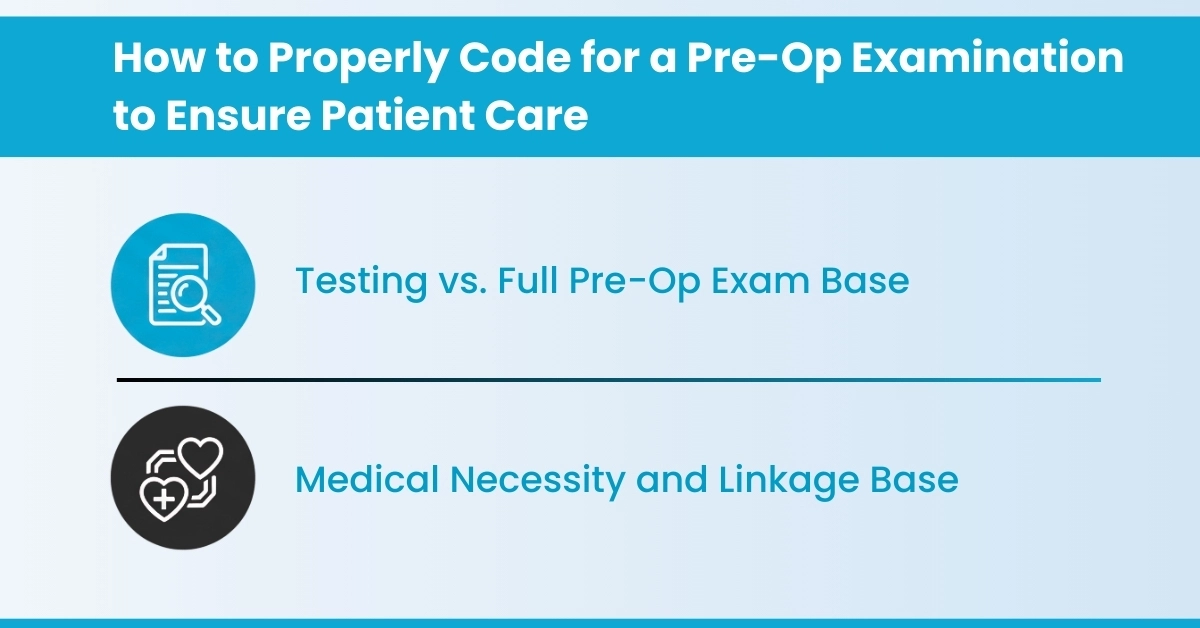
If a patient comes in just for preoperative labs, use Z01.812 as the primary diagnosis. Pair it with the surgical diagnosis (e.g., “knee replacement”) and any comorbidities
For a patient needing pacemaker evaluation before orthopedic surgery:
For claustrophobia patients needing sedation:
When billing for EKG interpretation during clearance:
Based on AMA’s CPT guidelines (pdf form), every pre-op exam ICD-10 claim needs:
At HelloMDs, our medical billing audit services often catch missing fields in this checklist and work with provider teams to correct documentation before submission, significantly reducing denials.

Denied claims can cost an average of $25-$118 to rework, depending on complexity. If your practice processes 50 pre op clearance claims per month and even 10% are denied and reworked, the annual cost could range from $1,500 to $7,100, not including the impact of delayed payments or denials.
With Hello MDs’ denial management and audit solutions, you can minimize this rework burden and recover more revenue.
Mastering pre-op clearance ICD-10 codes requires more than memorization. It demands integrated workflows, specialty expertise, and proactive denial prevention. The gaps competitors miss (surgeon request tracking, payer-specific rules, telehealth updates) are costing practices real money.
At HelloMDs, our RCM healthcare services transform pre-op clearance from a coding headache into a streamlined revenue stream. We reduce your denials, faster reimbursement, and minimize rework and administrative burden.
Ready to stop leaving money on the table? Partner with HelloMDs and let our certified experts handle your medical billing and coding complexities while you focus on patient care.
Disclaimer:
This content is provided for general billing and coding education only and does not substitute for professional medical, legal, or financial advice. Please verify ICD-10 codes and related guidance using official resources or a certified expert. Some images in this content are AI-generated and used solely for illustration.