
Accurate medical coding is essential for proper reimbursement and compliance in healthcare billing. When it comes to dermatological conditions like dyshidrotic eczema, understanding the correct ICD-10 codes ensures seamless claims processing and reduces denials.
In this guide, we’ll break it down simply, covering what it is, why the code matters, and new ways to handle it. We’ll also touch on related terms like dyshidrosis ICD-10 and dyshidrotic dermatitis ICD-10, which point to the same code. By the end, you’ll feel more in control.
Dyshidrotic eczema, also known as pompholyx or dyshidrosis, is a chronic skin condition characterized by small, itchy blisters that typically appear on the palms of hands, sides of fingers, and soles of feet. This inflammatory skin disorder affects approximately 5-20% of individuals with eczema and can significantly impact a patient’s quality of life.
The condition presents unique challenges for medical billing specialists, as proper documentation and accurate ICD-10 code selection are crucial for claim approval and appropriate reimbursement.
Many people confuse it with other rashes, like nummular eczema, which forms round patches elsewhere on the body. However, dyshidrotic eczema is unique in its spotty, blister-like appearance.
The primary ICD-10 code for dyshidrotic eczema is L30.1, which falls under the category of “Other and unspecified dermatitis.” This code specifically identifies pompholyx or dyshidrosis and should be used when a healthcare provider diagnoses this particular type of vesicular hand and foot eczema.
At HelloMDs, we help with medical coding services to make sure codes like L30.1 are used correctly for skin issues. This keeps your practice running smoothly and gets you paid faster.
Dyshidrotic eczema visits often involve evaluation, diagnosis, and treatment.
| CPT Code | Description |
|---|---|
| 99203–99205 | New patient evaluation & management |
| 99213–99215 | Established patient follow-up visits |
| 95044 | Patch testing (if contact allergy suspected) |
| 96910 | Phototherapy treatment |
| 17110 | Lesion destruction when applicable |
Billing Note: If performing a procedure + E/M on the same day, append modifier -25 to the E/M code to avoid denial.
Dyshidrotic eczema isn’t alone in the eczema family. Let’s look at similar ones. For nummular eczema ICD-10, the code is L30.0, which means nummular dermatitis. This type shows as coin-shaped patches on the skin, often on arms or legs.
L20.9 – Atopic dermatitis, unspecified
L23.9 – Allergic contact dermatitis, unspecified cause
L24.9 – Irritant contact dermatitis, unspecified cause
L25.9 – Unspecified contact dermatitis, unspecified cause
L30.0 – Nummular dermatitis
L30.3 – Infective dermatitis
L30.9 – Dermatitis, unspecified
L30.2 – Cutaneous autosensitization
L23.5 – Allergic contact dermatitis due to other chemical products
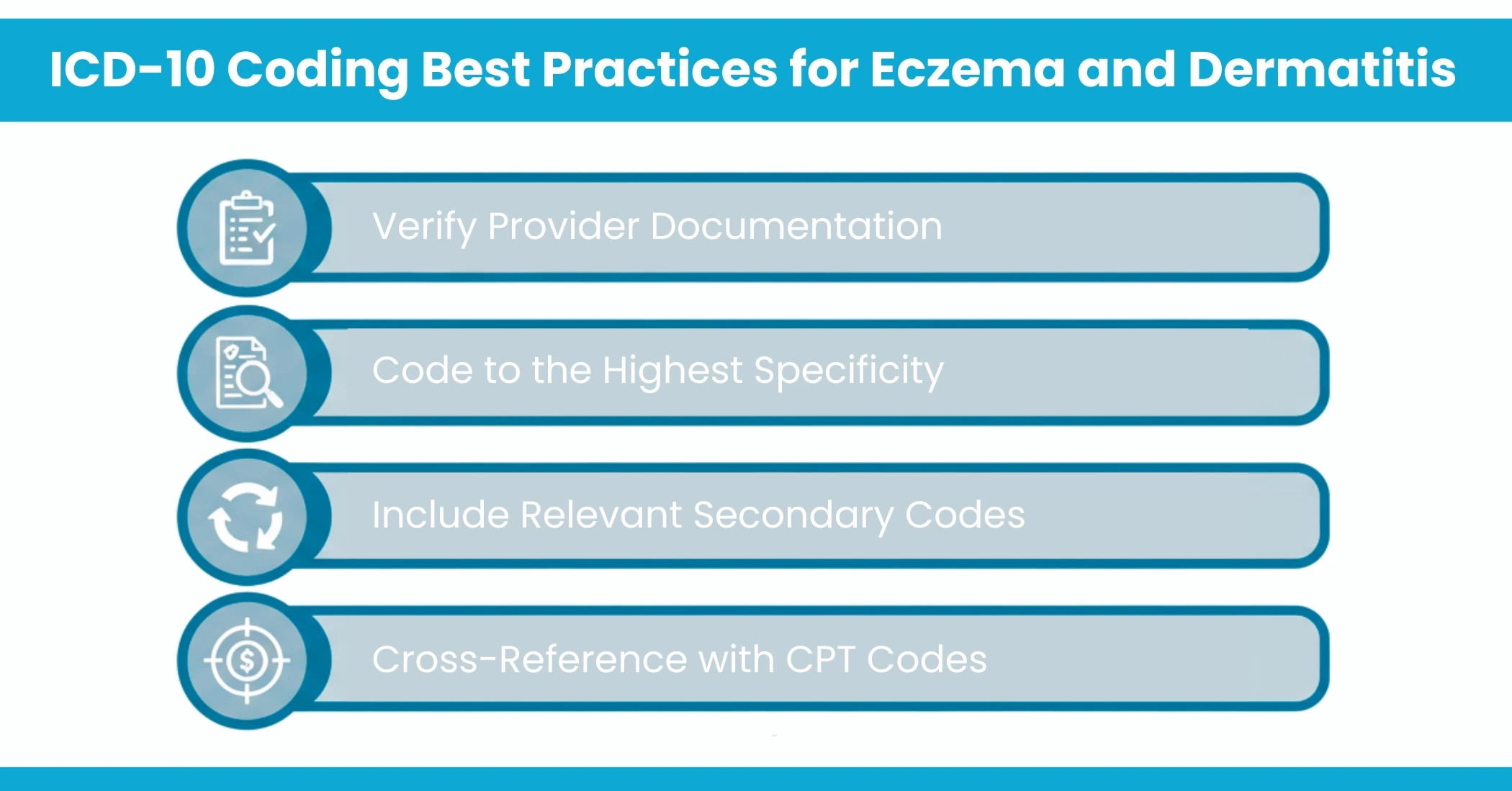
Ensure the medical record clearly documents the diagnosis of dyshidrotic eczema with specific clinical findings. Incomplete documentation is a leading cause of claim denials in dermatology billing.
Always use the most specific ICD-10 code available. For dyshidrotic eczema, L30.1 provides greater specificity than general dermatitis codes, leading to better reimbursement outcomes.
When applicable, include secondary diagnosis codes for:
Common CPT codes used alongside dyshidrotic eczema ICD-10 codes include:
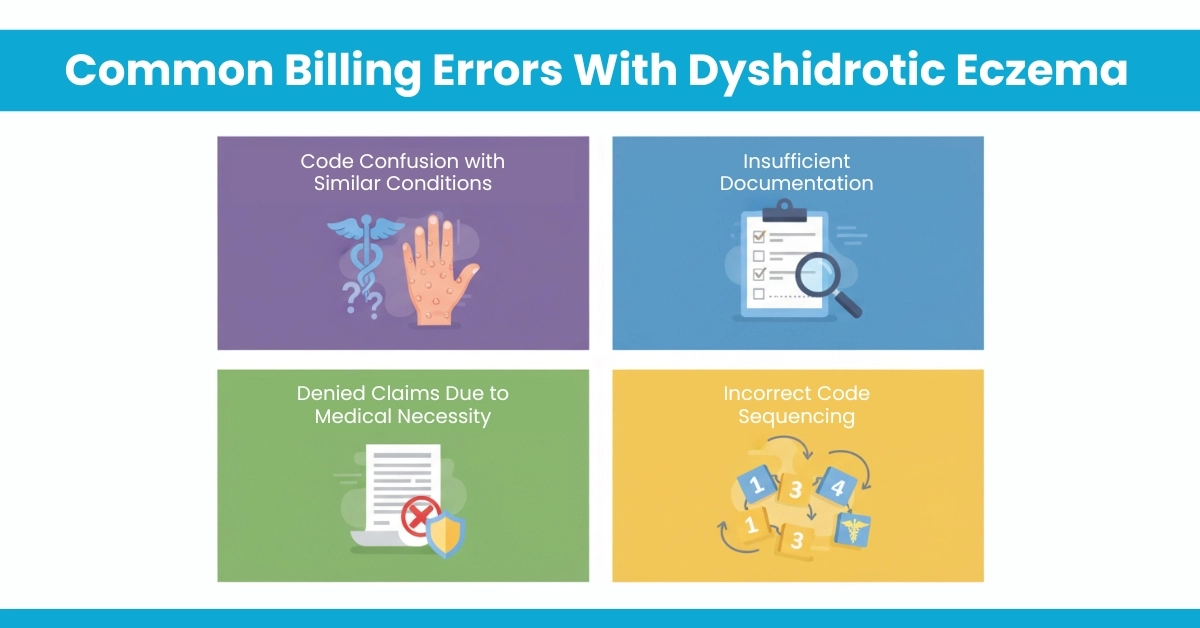
Solution: Differentiate dyshidrotic eczema (L30.1) from other hand dermatitis conditions through detailed clinical documentation of characteristic vesicular presentation.
Solution: Implement documentation templates that capture essential elements: lesion location, appearance, distribution, symptom severity, and aggravating factors.
Solution: Ensure documentation supports the medical necessity of treatments, especially for advanced therapies like phototherapy or systemic medications.
Solution: When multiple diagnoses exist, sequence codes according to the reason for the encounter and treatment provided during the visit.
Use alternative codes when:
Correct code selection maintains compliance and ensures accurate reimbursement.
Comprehensive documentation should include:
Accurate dyshidrotic eczema ICD-10 coding directly impacts your healthcare organization’s revenue cycle:
At Hello MDs, we focus on this. Our AAPC-certified coders handle medical coding services for specialities like dermatology. We also offer payment posting to track trends and accounts receivable services for quicker cash flow.
The ICD-10-CM code set undergoes annual updates every October 1st. Medical billing professionals should:
Mastering dyshidrotic eczema ICD-10 coding is essential for medical billing professionals working in dermatology or multi-specialty practices. The primary code L30.1 accurately represents this specific vesicular hand and foot eczema, ensuring proper claim processing and reimbursement.
By implementing best practices in documentation, code selection, and claim submission, healthcare organisations can optimize their revenue cycle while maintaining compliance with coding standards. Staying informed about related codes, understanding documentation requirements, and maintaining coding accuracy will position your medical billing operations for success.
For medical billing services that prioritize accuracy and compliance in dermatology coding, understanding the nuances of conditions like dyshidrotic eczema ensures your practice receives appropriate reimbursement for the care provided to patients.
Disclaimer:
Information provided here is not medical or billing advice. Please confirm all ICD-10 codes and recommendations with qualified experts. Images shown may include AI-generated examples.