
Are you ready for the biggest Medicare Remote Patient Monitoring update since 2019? Starting January 1, 2026, the CMS 2026 Physician Fee Schedule introduces game-changing RPM CPT codes for 2026 that finally match clinical reality. No more losing revenue because a patient transmitted data for only 14 days instead of 16. No more uncompensated 15-minute check-ins that fall short of the 20-minute threshold. You can now bill for shorter monitoring periods and reduced management time without sacrificing revenue.
Before 2026, the RPM billing structure had rigid thresholds:
A patient recovering from surgery who needs monitoring for just 10 days or a clinician spending 15 minutes reviewing vitals often couldn’t get paid. Now, under CMS’s updated RPM policy highlighted by Access Newswire, providers can bill for shorter monitoring windows (2-15 days) and brief clinical engagements, letting practices finally capture the value of real care.
The original RPM CPT codes (99445, 99454, 99457, 99458) revolutionized chronic care when introduced in 2019. But they carried inherent Medicare RPM limitations:
The CMS RPM policy update recognizes that meaningful clinical interventions don’t always fit rigid timeframes. With shorter monitoring windows now allowing reimbursement after just 2-15 days of readings, practices can finally capture the true value they provide to patients.
The star newcomer, CPT 99445, changes everything for short-term monitoring scenarios. This device supply code covered:
This code can’t be billed with 99454 in the same 30-day period. Choose the code that matches the measurement days.
When to use it: Post-operative recovery, medication titration periods, acute exacerbations, or patients testing RPM program suitability.
CPT 99454 remains the workhorse for sustained monitoring. The CMS clarification on RPM codes confirms it continues to cover:
Key Distinction to Consider: You cannot bill both 99445 and 99454 in the same month. Select the code that corresponds to the actual monitoring days.
Hello MDs’ in-house Expert Tip: Our medical billing and coding services team recommends updating your EHR to prevent auto-generating both codes simultaneously, as this can lead to claim denials.
This breakthrough RPM management time code finally rewards those clinically rich but time-limited interactions:
This code is perfect for proactive patient check-ins, medication adherence reviews, and early intervention scenarios where 20 minutes isn’t necessary, but clinical value is clearly demonstrated.
CPT 99457 (first 20+ minutes) and CPT 99458 (each additional 20 minutes) remain unchanged for longer engagements:
Both require at least one live phone or video interaction for the month. Texts, portals, or non-real-time contact don’t count toward the interactive communication requirement.
Understanding mutually exclusive RPM codes is non-negotiable for audit protection:
Code Pair | Rule | Consequence of Error |
99445 vs 99454 | Bill only one per 30-day period | Duplicate billing = claim denial + potential audit flag |
99470 vs 99457 | Bill only one per calendar month | Cannot stack; choose based on total minutes |
99457 + 99458 | Allowed; bill incrementally | Must document each 20-minute block separately |
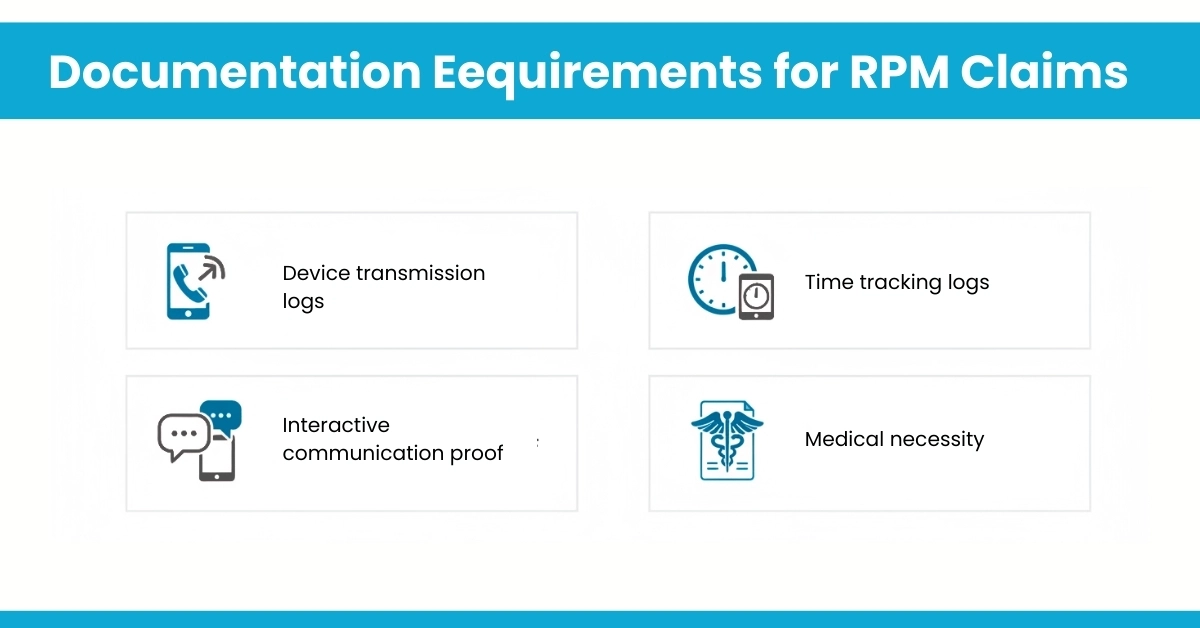
RPM CPT codes for 2026 (99457, 99458) require precise time tracking and documentation to ensure proper billing and compliance. Understanding the principles outlined in time-based 97350 CPT codes can help practices streamline RPM billing and avoid denials.
Here’s your definitive reference for RPM reimbursement rates 2026 (national averages):
CPT Code | Description | 2026 Reimbursement Rate | Billing Frequency |
99445 | Device supply, 2-15 days | ~$47 | Per 30-day period |
99454 | Device supply, 16-30 days | ~$43.02 to 47.43 | Per 30-day period |
99470 | First 10-19 min management | ~$26 | Per calendar month |
99457 | First 20+ min management | ~$48 | Per calendar month |
99458 | Each additional 20 min | ~$39-$43 per unit | Per 20-min increment |
Note:
Final published CMS reimbursement should be verified when the 2026 physician fee schedule data becomes available.
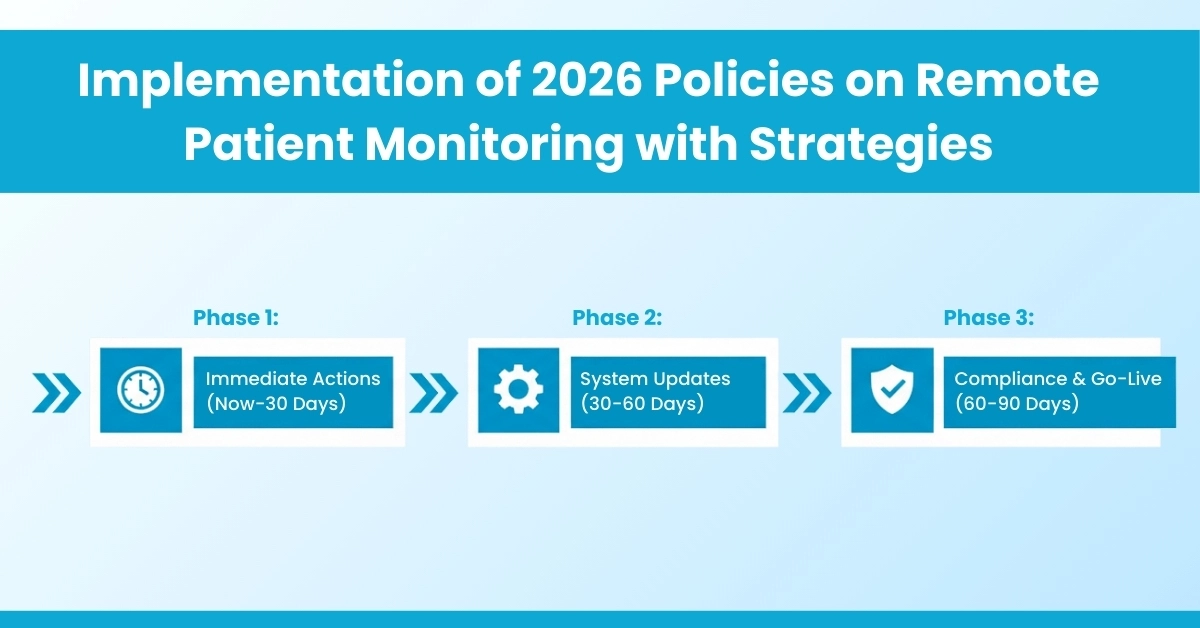
Don’t wait until December to prepare. Here’s your 90-day RPM implementation plan:
HelloMDs support: Our RCM healthcare services include a free RPM readiness assessment that evaluates your current workflow gaps and provides a customized implementation blueprint.
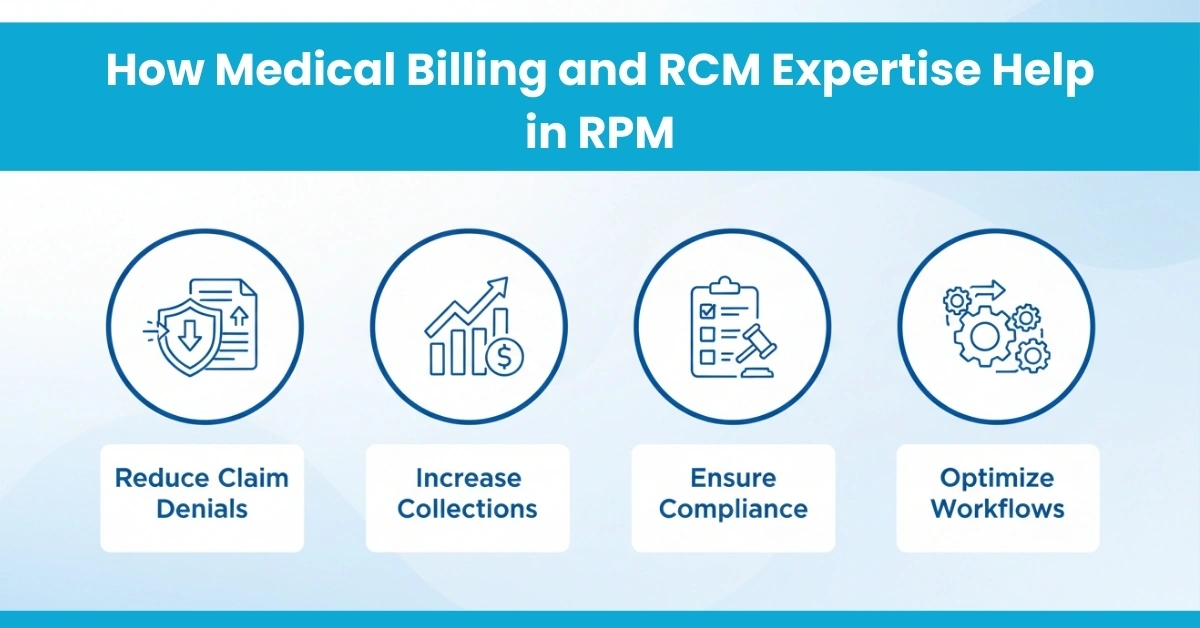
With 2026 RPM updates, billing complexity increases. Practices will need strong RCM support to:
Partner with HelloMDs RCM experts to ensure that practices are not only compliant but positioned to maximize revenue.
The 2026 RPM CPT codes represent CMS’s strongest endorsement yet of remote patient monitoring as mainstream care delivery. With CPT 99445 and CPT 99470, providers gain unprecedented flexibility to match billing with clinical reality but only if they master the mutual exclusivity rules and documentation requirements.
Preparing for RPM code changes isn’t just about learning new numbers. It’s about rethinking workflows, retraining staff, and partnering with RCM experts who understand the nuances. The practices that thrive will be those treating this as a strategic opportunity, not an administrative burden.
Disclaimer:
This content is for informational purposes only, not medical or billing advice. Always verify RPM CPT codes and reimbursement rules with official CMS guidelines or certified professionals. Some images or graphics may be illustrative or AI-generated.